Wastewater infrastructure
fifteen years outPlant upgrades are a multi-billion-dollar capital programme on a generational timescale. Phosphorus keeps arriving for every one of those years.
Not bind it to the bottom. Not kill what it feeds. Barges that work your water body through the season and carry the phosphorus off site — built from the start for lakes over 1,000 acres, where every other approach runs out of road.
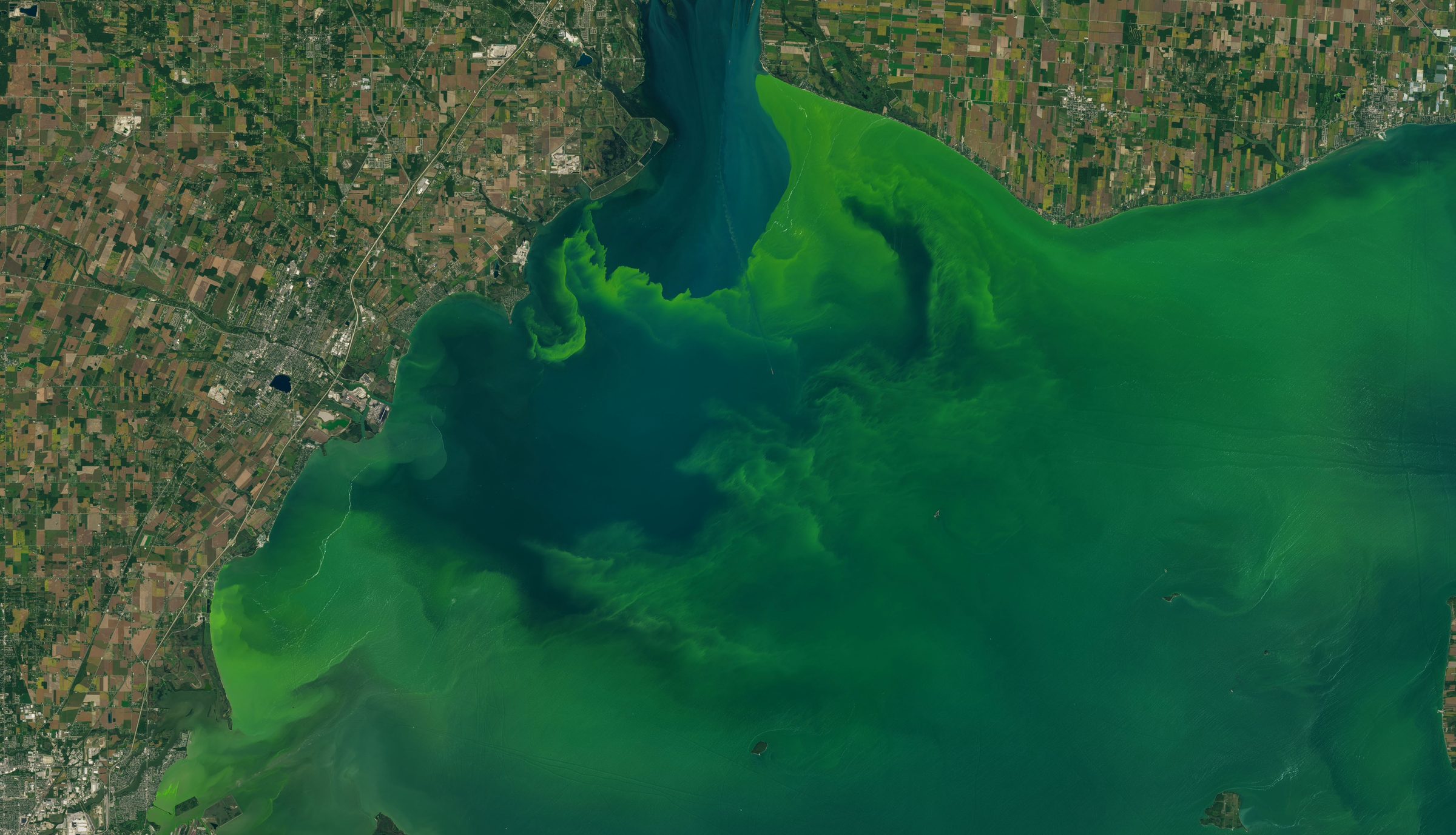
Western Lake Erie, Landsat 8 · NASA Earth Observatory / USGS
Blooms are the symptom. The cause is decades of phosphorus arriving from three places, none of which pause while you wait for the permanent fix.
The value lake-adjacent homes lose during a bloom. Homes within a third of a mile lose 11 to 17 per cent. On a lakefront community that is assessment base, not just property value.1
Nationally, eutrophication of US freshwaters is estimated to cost $2.2 billion a year in lost lakefront value, lost recreation, drinking water treatment and species recovery — a figure its authors call conservative.2
Plant upgrades are a multi-billion-dollar capital programme on a generational timescale. Phosphorus keeps arriving for every one of those years.
Storm flow carries nutrients off every street, roof and lawn in the watershed. There is no version of this that pauses.
Best-management practices work. Changing them across a watershed takes a generation of coordination between parties who don’t report to you.
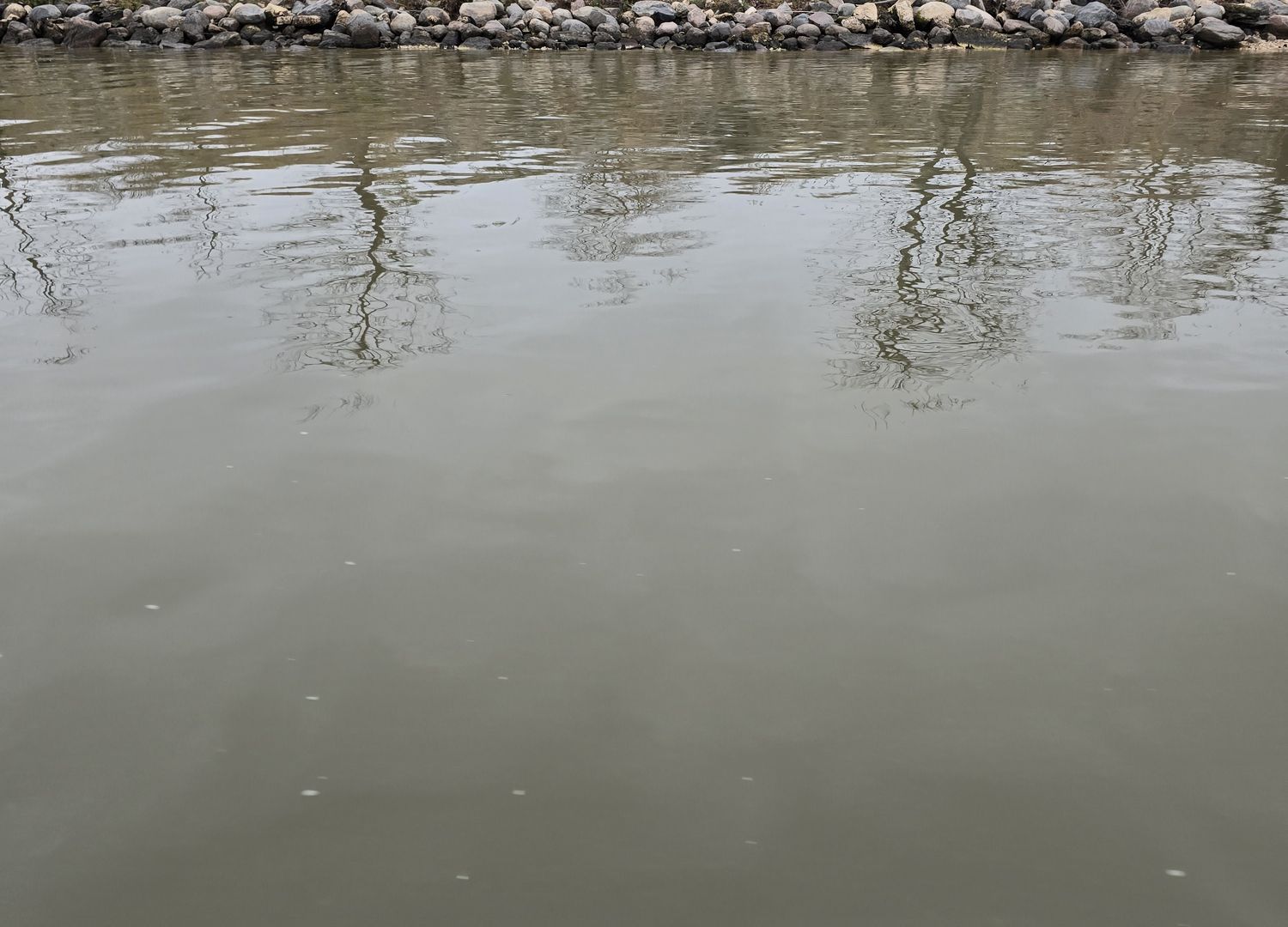
Nutrient-laden water at a hardened shoreline. Loading continues through every season, which is why a single treatment is overwhelmed by the following year.

Chemical dosing, aeration, ultrasonic, electrochemical — all of it was designed for small, contained water bodies. Past a few hundred acres the cost curve, the logistics or the chemistry gives out. The water bodies that need help most are the ones nobody is serving.
Lakes need physical removal of phosphorus. Nothing on the market today scales to do it on a large water body.
Lakewater was built for that gap from the start. We treat lakes of all sizes today, and our target is water bodies over 1,000 acres. Canada and the United States have no shortage of them. As we grow, smaller lakes move to a network of regional contractors, so our barges stay on the water nobody else is treating.
None of them can be retrofitted onto a system designed for ponds. Together they are why the service scales.
Competing systems are shore-based, or a single application spread across a whole surface. We put the filtration on the water itself and move it to where the phosphorus actually sits — the only approach whose cost doesn’t run away with acreage.
Chemical treatments all work the same way: add a binding agent so the phosphorus settles out. The phosphorus stays in the lake, the binding agent stays in the lake, and every application adds to what is already there.
We work in the water column, and what we capture physically leaves the water body. Nothing is added to your water. Nothing is left behind in it.
A chemical treatment is a single event. On a water body with continuous inflow it is overwhelmed by the next season’s loading. Our service runs continuously under a long-term contract, and scales down as your wastewater and watershed upgrades come online.
Twelve weeks for a small contract, forty for a large one. The barge and the media are built to suit your water body — there is no shelf to pull them off.
First meeting
We look at your water body, its loading, and what you’re required to achieve. This sets how much phosphorus has to come out — the figure everything else is sized around.
On your water
We bring equipment to your lake and show you phosphorus being captured from your own water, before you commit to anything.
Fixed price
A fixed cost to mobilize to your site, plus the annual service contract for ongoing removal.
12 to 40 weeks
Barge and filtration built for your lake. We lease commercial space in your community, outfit it, and hire and train the local crew who run it.
Each season
Loaded media comes ashore, phosphorus is stripped off, media goes back out. Every chemical step on land, inside containment, never in your lake.
The question that separates every technology on this list.
| LakewaterMobile filtration | ElectrochemicalShore-based plant | Alum & zincChemical dosing | Lanthanum clayChemical dosing | UltrasonicAlgae suppression | ElectromagneticOxygenation | |
|---|---|---|---|---|---|---|
| Where the phosphorus ends up | Removed from the lake | Physically removed | Settles into sediment | Settles into sediment | Not removed; targets algae | Taken up by bacteria, stays in lake |
| Designed for water bodies over 1,000 acres | ✓ | × | × | × | × | × |
| Leaves no residuals in the water | ✓ | ✓ | × | × | ✓ | ✓ |
| Risk compounds with repeated use | None | None | HIGH | HIGH | None | Possible |
| Phosphorus recovered for reuse | ✓ | × | × | × | × | × |
| Effective immediately | ✓ | ✓ | ✓ | ✓ | ✓ | Delayed; relies on bacterial growth |
Scroll the table sideways to see every option.
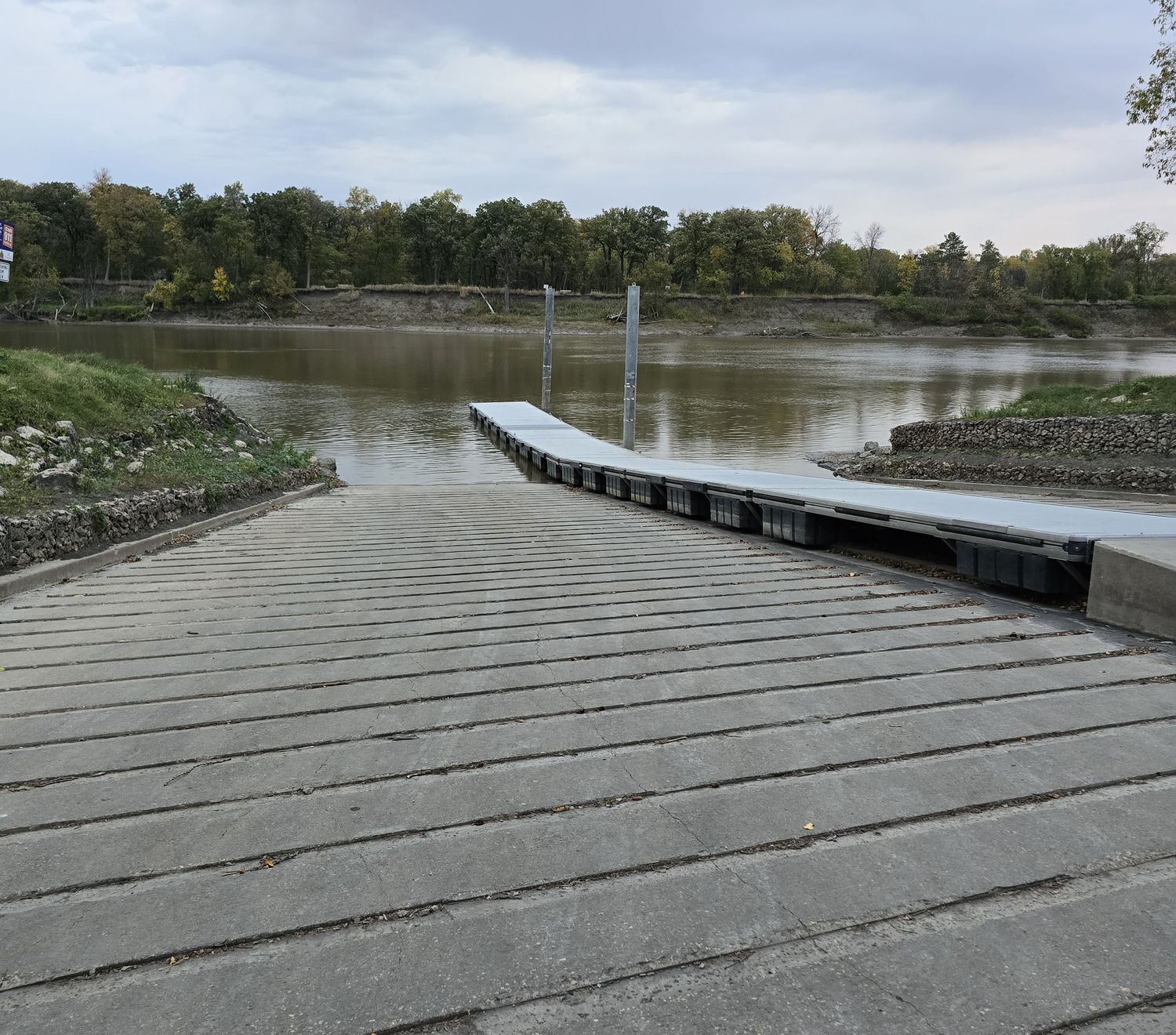
A municipal launch and a leased local building. That is the entire site requirement. No capital works, and nothing for your staff to own or operate.
We’ll look at your lake, its loading, and what you’re required to achieve — then show you phosphorus coming out of your own water before you commit to anything.